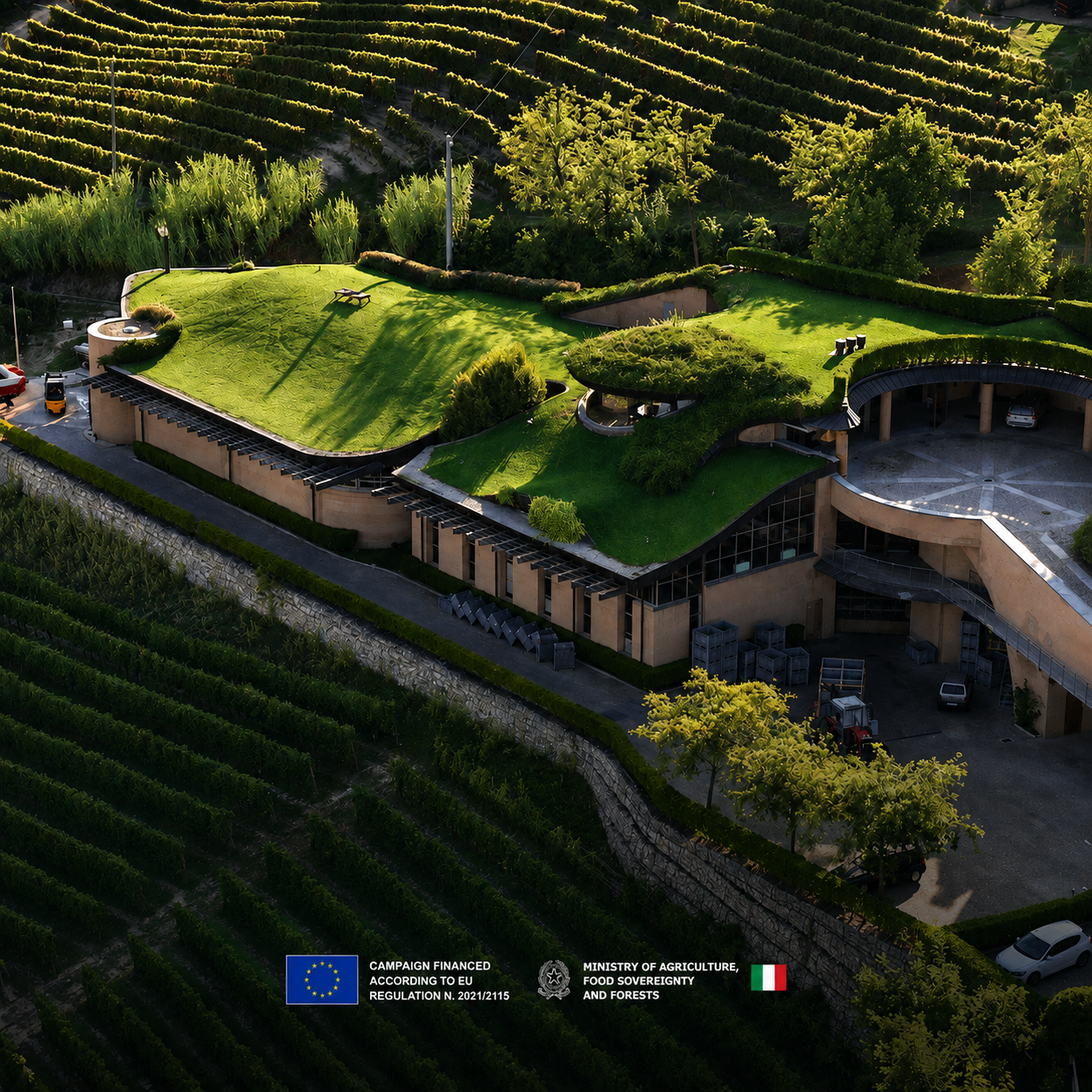
The historical Ratti Cellar has been in the township of
La Morra since 1965. In 2005, the construction was entirely renovated: a
concealed architecture that is not ostensible and therefore, naturally filling
the gaze of the beholder. Sustainability means many things. Our Cellar is
sustainable also on account of its construction blueprint. The building’s lines
seamlessly meld with those of the hill, and its colors find continuity with
those of the surrounding vegetation.
Vinification in La Morra follows precise rules that
across the years take on the more precise contours of the Ratti production
philosophy. An attentive eye to the peculiarities of the territory (with
full awareness that each zone or subzone generates wonderfully different
Barolos), with the felicitous intuition of bringing in the Langhe district the
French concept of the Crus, a smaller impact from human hands in the
vinification process and a different approach towards aging/refining.
The new cellar. If wine is continuity vis-à-vis the
original characteristics of the grapes, the cellar becomes an extension of the
natural space surrounding it. This is the intuition that sparked the creation
of the new building in 2002. The multi-level construction, designed by
architect Marco Sitia, seamlessly melds into its surroundings. The lines of its
covered spaces follows the hill’s profile; the construction materials provide
the exterior with an aesthetic continuity with the natural tones of the
surroundings. The Cellar plunges into the hill, that is, into the
selfsame ground whose shape and properties offer unique wines. The form and
structure of the areas dedicated to the aging process maintain a steady
temperature, reducing the need for conditioning to a bare minimum: minor
contrivances in the planning stage that become major strongpoints for optimal
vinification.